In the high-stakes world of smartphone repair, precision is paramount. Armed with the right tools, you can transform a damaged device into a fully functional masterpiece.
Whether you’re a seasoned professional or just starting your journey in mobile device repair, this comprehensive guide will walk you through the essential smartphone repair tools every technician should have in their arsenal.
Let’s dive into the world of precision instruments and specialized equipment that will help you tackle even the most challenging repairs with confidence.
Why the Right Tools Matter in Smartphone Repair
Before we explore our list of must-have tools for phone technicians, let’s briefly discuss why investing in quality equipment is crucial:
- Efficiency: The right tools help you complete repairs faster and more accurately.
- Professionalism: Quality equipment reflects well on your business and instills customer confidence.
- Versatility: A well-stocked toolbox allows you to handle a wide range of repair jobs.
- Precision: Smartphones require delicate handling, and specialized tools ensure precision work.
- Safety: Proper tools reduce the risk of damaging devices or injuring yourself during repairs.
Table of Contents
Essential Smartphone Repair Tools
Now, let’s explore the 25 essential smartphone repair tools every technician needs. From professional cell phone repair equipment to must-have tools for phone technicians, build your ultimate mobile phone repair kit.
1. Precision Screwdriver Set
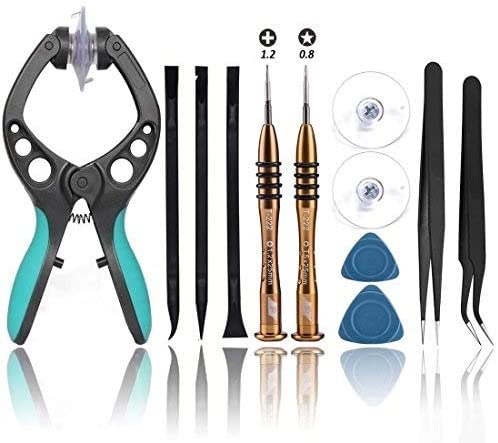
A high-quality set of precision screwdrivers is the backbone of any smartphone repair toolbox. Look for a kit that includes:
- Phillips head screwdrivers (PH000, PH00, PH0)
- Flathead screwdrivers (1.2mm, 1.5mm, 2.0mm)
- Pentalobe screwdrivers (P2, P5, P6)
- Torx screwdrivers (T3, T4, T5, T6)
Pro Tip: Invest in a set with magnetized tips for easier handling of tiny screws.
2. Spudgers and Pry Tools
These plastic or metal tools are essential for safely opening device casings and disconnecting delicate components. Include:
- Plastic spudgers (various sizes)
- Metal spudgers
- Guitar picks (great for prying open cases)
3. Tweezers

A set of fine-tipped tweezers is crucial for handling small components and connectors. Look for:
- Anti-static tweezers
- Straight tweezers
- Curved tweezers
4. Suction Cups
Suction cups are invaluable for removing screens and back panels. Include:
- Small suction cups for phones
- Larger suction cups for tablets
5. Heat Gun or iOpener
These tools help soften adhesives for easier component removal. Choose between:
- A temperature-controlled heat gun
- An iOpener heating pad
Safety First: Always use heat tools with caution to avoid damaging sensitive components.
6. Anti-Static Wrist Strap
Protect sensitive electronics from static discharge with an anti-static wrist strap.
7. Multimeter
A digital multimeter is essential for diagnosing electrical issues in smartphones. Look for one with:
- Voltage measurement
- Continuity testing
- Resistance measurement
8. Soldering Iron and Accessories
For advanced repairs, a soldering station is a must. Include:
- Temperature-controlled soldering iron
- Solder wire
- Flux
- Desoldering pump
9. Magnifying Lamp or Microscope
Enhance your visual acuity with:
- An LED magnifying lamp
- A digital microscope for intricate work
10. Anti-Static Mat
Protect your workspace and devices with an anti-static mat.
11. Cleaning Supplies
Maintain a professional finish with:
- Isopropyl alcohol
- Microfiber cloths
- Compressed air duster
12. Adhesive and Tapes
For reassembly and waterproofing, stock up on:
- Double-sided adhesive tape
- B7000 glue
- T7000 glue
13. Battery Tester
A dedicated battery tester is crucial for accurately diagnosing battery issues in smartphones. Look for a tester that can:
- Measure voltage and capacity
- Test different battery models
- Provide a detailed health report
Some advanced testers even offer features like internal resistance measurement and charge/discharge cycle testing. This tool helps you determine whether a battery needs replacement or if there’s another issue causing power problems.
14. Ultrasonic Cleaner
An ultrasonic cleaner uses high-frequency sound waves to remove dirt, grime, and oxidation from small electronic components. It’s particularly useful for:
- Cleaning circuit boards
- Removing corrosion from charging ports
- Restoring water-damaged components
When choosing an ultrasonic cleaner, consider one with adjustable power settings and a timer. Also, use a cleaning solution specifically designed for electronic components.
15. Logic Board Holder
A logic board holder securely supports the main board of a smartphone during repair work. Key features to look for include:
- Adjustable clamps to fit different board sizes
- 360-degree rotation for easy access
- Heat-resistant materials
Some holders also come with integrated magnifying glasses or LED lights for enhanced visibility during intricate work.
16. LCD Separator Machine
This specialized tool is used for separating the LCD from the digitizer in smartphone screens. It typically uses controlled heat and suction to safely separate the layers. When selecting an LCD separator machine, consider:
- Temperature control precision
- Suction strength
- Compatibility with different phone models
While it’s a significant investment, it can greatly improve the efficiency and quality of screen repairs.
17. Hot Plate
A hot plate is essential for various smartphone repair tasks, including:
- Softening adhesives for component removal
- Reballing BGA chips
- Preheating boards for soldering
Look for a hot plate with precise temperature control and a large enough surface area to accommodate smartphone logic boards.
18. Screwdriver Bit Driver
A versatile bit driver can accommodate various screwdriver bits, making it an all-in-one solution for different devices. Features to consider include:
- Magnetic bit holder
- Ergonomic grip
- Torque adjustment (for more advanced models)
This tool saves space in your toolkit and allows for quick bit changes during repairs.
19. Plastic Triangle Opening Tool
This simple yet effective tool is perfect for prying open tightly sealed cases without causing damage. Its thin, triangular shape allows it to slip into narrow gaps easily. Look for ones made of durable plastic that won’t scratch or mark device casings.
20. Nylon Pry Bar Set
Nylon pry bars offer leverage for opening devices while minimizing the risk of scratches. A good set should include:
- Various sizes for different devices
- Curved and straight ends
- Durable, non-conductive material
These tools are especially useful for removing back covers and separating tightly fitted components.
21. Magnetic Project Mat
A magnetic project mat helps keep screws and small parts organized during repairs. Features to look for include:
- Labeled sections for different screw sizes
- Non-slip surface
- Dry-erase compatibility for making notes
Some mats even come with a schematic drawing of common phone models to help you keep track of screw placements.
22. Thermal Paste
High-quality thermal paste is essential for repairs involving heat sinks or processors. It ensures proper heat dissipation, which is crucial for device performance and longevity. When choosing thermal paste, consider:
- Thermal conductivity rating
- Ease of application
- Non-conductive properties
Always apply thermal paste sparingly and evenly for best results.
23. Precision Knife Set
A set of fine-tipped knives is useful for precise cutting and trimming of adhesives and components. Look for a set that includes:
- Various blade shapes (straight, curved, angled)
- Comfortable, non-slip handles
- Durable, corrosion-resistant blades
Always use these tools with caution and replace blades regularly to maintain sharpness and safety.
24. ESD-Safe Brush
An anti-static brush helps clean delicate electronic components without risking static discharge. Key features include:
- Soft, non-abrasive bristles
- ESD-safe materials
- Various sizes for different cleaning tasks
Use these brushes to remove dust and debris from circuit boards and other sensitive areas.
25. Smartphone Opening Pliers
These specialized pliers help safely separate stubborn smartphone casings. They typically feature:
- Adjustable opening width
- Padded jaws to prevent damage
- Ergonomic handles for better grip
When using these pliers, always apply gentle, even pressure to avoid cracking or bending the device frame.
Tips When Buying Cell Phone Repair Tools
As you assemble your smartphone repair toolbox essentials, consider the following tips:
- Invest in Quality: While it may be tempting to opt for cheaper tools, investing in high-quality equipment will save you time and frustration in the long run.
- Start with the Basics: If you’re just beginning, focus on acquiring the most essential tools first and expand your collection as you gain experience.
- Stay Organized: Use a toolbox with compartments or a tool roll to keep your equipment organized and easily accessible.
- Maintain Your Tools: Regularly clean and maintain your tools to ensure they remain in top condition.
- Upgrade Gradually: As your skills improve, consider upgrading to more advanced tools to tackle complex repairs.
Conclusion
Remember, while having the right phone repair tools is crucial, it’s equally important to develop the skills to use them properly. Always practice on spare or broken devices before attempting repairs on customers’ phones. Additionally, stay updated on the latest repair techniques and tools as smartphone technology continues to evolve.
By incorporating these advanced phone repair tools into your smartphone repair kit, you’ll be well-equipped to handle a wide range of complex repairs efficiently and professionally. This not only improves your repair capabilities but also enhances customer satisfaction and potentially increases your business’s profitability.
Are you a smartphone repair technician? What’s your most indispensable phone repair tool? Share your experiences and recommendations in the comments below!