Have you ever wondered how some websites always seem to appear at the top of Google search results, complete with eye-catching images, review stars, or answer boxes? These coveted positions are known as Google SERP features, and they can significantly boost your website’s visibility and click-through rates.
Getting featured on Google is like winning the digital lottery. It can drive massive traffic to your site and establish you as an authority in your niche.
In this comprehensive guide, we’ll explore the strategies and techniques to get your website featured on Google. Whether you’re a small business owner, a blogger, or an e-commerce entrepreneur, these insights will help you climb to the top of search results and stand out from the competition.
Understanding Google SERP Features
Before we dive into the how-to, let’s quickly review the types of Google SERP features you can aim for:
- Featured Snippets
- People Also Ask boxes
- Knowledge Panels
- Local Pack results
- Image Packs
- Video Carousels
- Top Stories
- Rich Results (including Recipe, Review, and Event rich results)
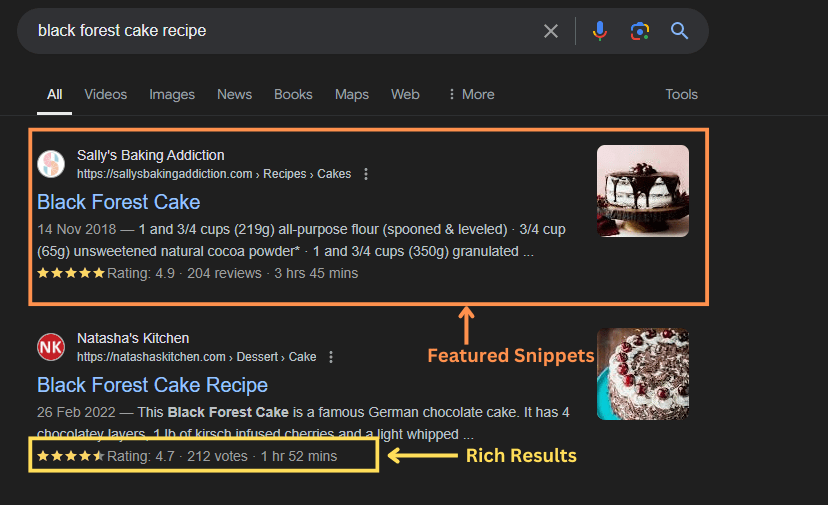
How to Get Your Website Featured on Google Featured Snippets
Learn how to get your website featured on Google with our comprehensive guide. Discover expert tips on SEO, featured snippets, and rich results optimization for maximum visibility. Now, let’s explore how to optimize your website to increase your chances of being featured in these prime positions.
Table of Contents
1. Optimize for Featured Snippets
Featured snippets, also known as “position zero,” appear at the top of search results and provide quick answers to user queries.
Key strategies:
- Identify common questions in your niche
- Provide clear, concise answers (40-60 words)
- Use structured data markup
- Implement a Q&A format in your content
Pro tip: To increase your chances of earning a featured snippet, focus on long-tail keywords and ‘how-to’ queries.
2. Leverage the Power of Structured Data
Structured data helps Google understand your content better, increasing your chances of appearing in rich results.
Steps to implement structured data:
- Choose the appropriate schema markup for your content
- Use Google’s Structured Data Markup Helper
- Test your markup with the Rich Results Test tool
- Implement the markup on your website
Structured data is like giving Google a roadmap to your content.
3. Create High-Quality, Comprehensive Content
Google favors in-depth, authoritative content that thoroughly answers user queries.
Content creation tips:
- Research your target keywords thoroughly
- Cover topics comprehensively
- Use descriptive headings and subheadings
- Include relevant images, videos, and infographics
- Update your content regularly
Related: 10 Best Sources for Free Stock Images for Websites
4. Optimize Your Website’s Technical SEO
A solid technical SEO foundation is crucial for getting featured on Google.
Technical SEO checklist:
- Ensure fast loading speeds
- Make your site mobile-friendly
- Implement SSL encryption
- Create an XML sitemap
- Use canonical tags to avoid duplicate content
Related: 20 Best CDNs for WordPress Sites to Boost Speed (Free & Paid Options)
Pro tip: Don’t overlook the basics. A technically sound website is more likely to be featured in Google’s SERP features.
5. Build High-Quality Backlinks
Backlinks from reputable sources signal to Google that your content is trustworthy and authoritative.
Link building strategies:
- Create linkable assets (infographics, original research, tools)
- Guest post on industry-leading websites
- Engage in digital PR
- Recover lost or broken backlinks
- Participate in relevant online communities
Related: 50+ High-Quality Guest Posting Sites List for 2024
Remember: Quality trumps quantity when it comes to backlinks. Focus on earning links from authoritative sources in your niche.
6. Optimize for Local SEO
For businesses targeting local customers, optimizing for the Local Pack can significantly increase visibility.
Local SEO tips:
- Claim and optimize your Google My Business listing
- Ensure NAP (Name, Address, Phone) consistency across the web
- Encourage and respond to customer reviews
- Create location-specific content
- Build local citations
7. Focus on User Experience (UX)
Google increasingly prioritizes websites that offer excellent user experiences.
UX optimization strategies:
- Improve site navigation
- Enhance readability with proper formatting
- Optimize for mobile devices
- Reduce pop-ups and intrusive interstitials
- Implement internal linking
A positive user experience not only helps with Google features but also improves engagement and conversions.
Related: 10 Expert Tips to Create a Website That Converts Like Crazy
8. Leverage Video Content
With the rise of video carousels in search results, creating and optimizing video content can help you stand out.
Video optimization tips:
- Create engaging, informative videos
- Optimize video titles and descriptions with target keywords
- Use closed captions and transcripts
- Host videos on YouTube and embed them on your site
- Implement video schema markup
Video content can help you capture featured spots in both regular search results and Google’s video tab.
Monitoring and Improving Your Google SERP Features
Getting featured on Google is an ongoing process. Here’s how to track and improve your performance:
- Use Google Search Console to monitor your search performance
- Track your featured snippets and rich results using tools like SEMrush or Ahrefs
- Regularly update and improve your top-performing content
- A/B test your meta titles and descriptions
- Stay up-to-date with Google’s algorithm updates and SERP feature changes
Continuous monitoring and optimization are key to maintaining and improving your featured positions on Google.
Frequently Asked Questions
Q1: How long does it take to get featured on Google?
A: There’s no guaranteed timeframe, but with consistent effort, you may start seeing results within 3-6 months.
Q2: Can small websites compete for Google SERP features?
A: Absolutely! Focus on creating high-quality, niche content to increase your chances of being featured.
Q3: Are paid ads necessary to get featured on Google?
A: No, Google SERP features are primarily based on organic search results, not paid advertising.
Q4: How often should I update my content to maintain featured positions?
A: Aim to review and update your top-performing content at least quarterly, or more frequently in fast-changing industries.
Q5: Can I opt out of having my content featured in Google snippets?
A: Yes, you can use the “nosnippet” meta tag to prevent Google from displaying your content in featured snippets.
Conclusion

In conclusion, getting your website featured on Google requires a multifaceted approach combining technical SEO, high-quality content creation, and user experience optimization. By implementing the strategies outlined in this guide, you’ll be well on your way to increasing your visibility in Google’s search results.
Remember, the digital landscape is constantly evolving, so stay informed about the latest SEO trends and Google updates. Ready to skyrocket your website’s visibility on Google? Start implementing these strategies today and share your success stories in the comments below!
Related: SEO Supercharge! The Guaranteed Guide to Ranking Higher